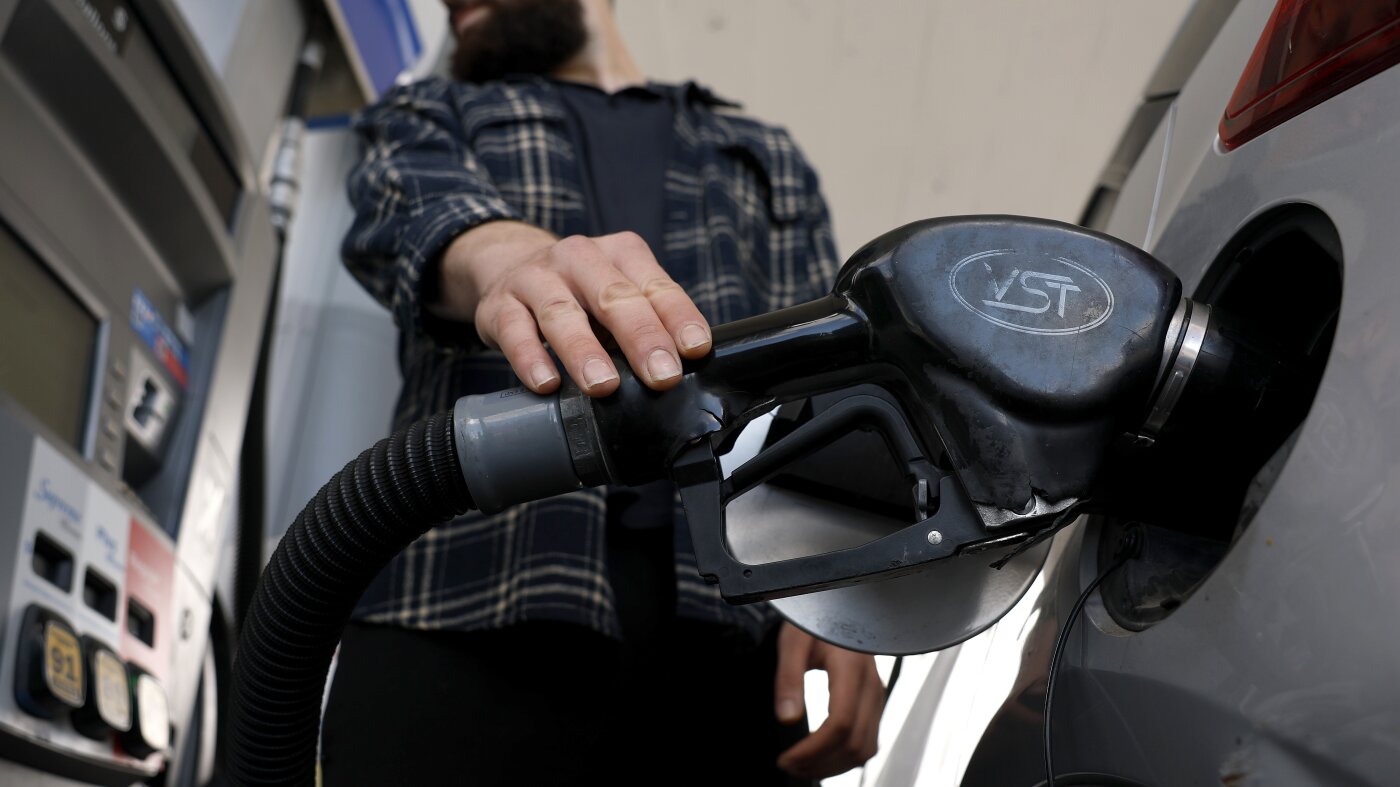
Fuel Saving Strategies - as today’s market coverage highlights revenue momentum, earnings growth, and future outlook influencing stocks and investor confidence. The national average for a gallon of gasoline stands at $4.55 as the United States enters one of its busiest travel weekends of the year. To manage higher fuel costs, drivers are considering slower driving, switching to electric vehicles, or reducing trips altogether.
Live News
Fuel Saving Strategies - as today’s market coverage highlights revenue momentum, earnings growth, and future outlook influencing stocks and investor confidence. Market behavior is often influenced by both short-term noise and long-term fundamentals. Differentiating between temporary volatility and meaningful trends is essential for maintaining a disciplined trading approach. The latest national average gasoline price of $4.55 per gallon has been reported as millions of Americans prepare for a peak travel weekend. According to the source, motorists are weighing several options to reduce fuel expenses, including driving at slower speeds, adopting electric vehicles (EVs), and minimizing or eliminating non-essential driving. Driving slower can improve fuel efficiency—the U.S. Department of Energy notes that each 5 mph decrease in highway speed may improve fuel economy by 7% to 14%. Switching to an electric vehicle would eliminate gasoline costs entirely, though upfront purchase prices and charging infrastructure remain considerations. For those unable to change vehicles, combining errands, carpooling, or using public transit could reduce total miles driven. The source does not provide specific savings estimates beyond these general strategies. The $4.55 figure represents a notable increase from recent norms, though it is not a record high. The timing coincides with the Memorial Day weekend or another holiday period, depending on the year, when gasoline demand typically peaks. Higher prices may be influencing travel plans, but the exact impact on aggregate demand remains unclear.
As Gas Prices Hit $4.55, Drivers Explore Fuel-Saving Strategies Ahead of Busy Travel Weekend Technical analysis can be enhanced by layering multiple indicators together. For example, combining moving averages with momentum oscillators often provides clearer signals than relying on a single tool. This approach can help confirm trends and reduce false signals in volatile markets.Access to real-time data enables quicker decision-making. Traders can adapt strategies dynamically as market conditions evolve.As Gas Prices Hit $4.55, Drivers Explore Fuel-Saving Strategies Ahead of Busy Travel Weekend Investors often balance quantitative and qualitative inputs to form a complete view. While numbers reveal measurable trends, understanding the narrative behind the market helps anticipate behavior driven by sentiment or expectations.Real-time monitoring of multiple asset classes can help traders manage risk more effectively. By understanding how commodities, currencies, and equities interact, investors can create hedging strategies or adjust their positions quickly.
Key Highlights
Fuel Saving Strategies - as today’s market coverage highlights revenue momentum, earnings growth, and future outlook influencing stocks and investor confidence. Many investors adopt a risk-adjusted approach to trading, weighing potential returns against the likelihood of loss. Understanding volatility, beta, and historical performance helps them optimize strategies while maintaining portfolio stability under different market conditions. Key takeaways from the latest data include the pressure on household budgets from elevated gasoline costs. For consumers, even small behavioral changes—such as reducing speed by 5–10 mph, ensuring proper tire inflation, and avoiding excessive idling—could cumulatively lower fuel bills. Electric vehicles present a longer-term option, but high upfront costs and limited charging access may slow widespread adoption. From a market perspective, sustained high gasoline prices could lead to reduced driving miles and lower demand for gasoline, potentially easing price pressures over time. Conversely, if demand remains robust during the travel weekend, prices could stay elevated. The energy sector may see mixed impacts: oil refiners could benefit from high margins, while retailers of gasoline might face volume declines as consumers cut back. No specific forecasts have been provided in the source, but historical patterns suggest that consumers often adjust behavior when prices cross psychological thresholds like $4.00 per gallon. The shift toward fuel-efficient vehicles, including hybrids and EVs, tends to accelerate in such environments.
As Gas Prices Hit $4.55, Drivers Explore Fuel-Saving Strategies Ahead of Busy Travel Weekend Access to futures, forex, and commodity data broadens perspective. Traders gain insight into potential influences on equities.Cross-market correlations often reveal early warning signals. Professionals observe relationships between equities, derivatives, and commodities to anticipate potential shocks and make informed preemptive adjustments.As Gas Prices Hit $4.55, Drivers Explore Fuel-Saving Strategies Ahead of Busy Travel Weekend Real-time monitoring of multiple asset classes can help traders manage risk more effectively. By understanding how commodities, currencies, and equities interact, investors can create hedging strategies or adjust their positions quickly.Market participants increasingly appreciate the value of structured visualization. Graphs, heatmaps, and dashboards make it easier to identify trends, correlations, and anomalies in complex datasets.
Expert Insights
Fuel Saving Strategies - as today’s market coverage highlights revenue momentum, earnings growth, and future outlook influencing stocks and investor confidence. Scenario modeling helps assess the impact of market shocks. Investors can plan strategies for both favorable and adverse conditions. For investors, the current gasoline price environment may have implications across several sectors. Automakers with strong EV lineups—such as Tesla, General Motors, and Ford, among others—could see increased interest from consumers looking to avoid gasoline costs. However, the transition to electric mobility remains gradual, and traditional internal combustion engine vehicle sales may not decline sharply in the near term. The energy sector might experience mixed outcomes: upstream oil producers could benefit from sustained high prices, while downstream companies (e.g., refiners and fuel retailers) could face margin compression if demand falls. Renewable energy and battery storage stocks could also attract attention as alternatives to gasoline-dependent transportation. Broader economic impacts are worth monitoring. Higher gasoline prices act as a tax on consumers, potentially reducing discretionary spending in other areas. This could weigh on consumer-facing stocks and retail sectors that are not energy-related. However, the effect may be moderate if prices stabilize or decline after the holiday weekend. Disclaimer: This analysis is for informational purposes only and does not constitute investment advice.
As Gas Prices Hit $4.55, Drivers Explore Fuel-Saving Strategies Ahead of Busy Travel Weekend Monitoring global indices can help identify shifts in overall sentiment. These changes often influence individual stocks.Many traders use alerts to monitor key levels without constantly watching the screen. This allows them to maintain awareness while managing their time more efficiently.As Gas Prices Hit $4.55, Drivers Explore Fuel-Saving Strategies Ahead of Busy Travel Weekend Historical precedent combined with forward-looking models forms the basis for strategic planning. Experts leverage patterns while remaining adaptive, recognizing that markets evolve and that no model can fully replace contextual judgment.Real-time data supports informed decision-making, but interpretation determines outcomes. Skilled investors apply judgment alongside numbers.