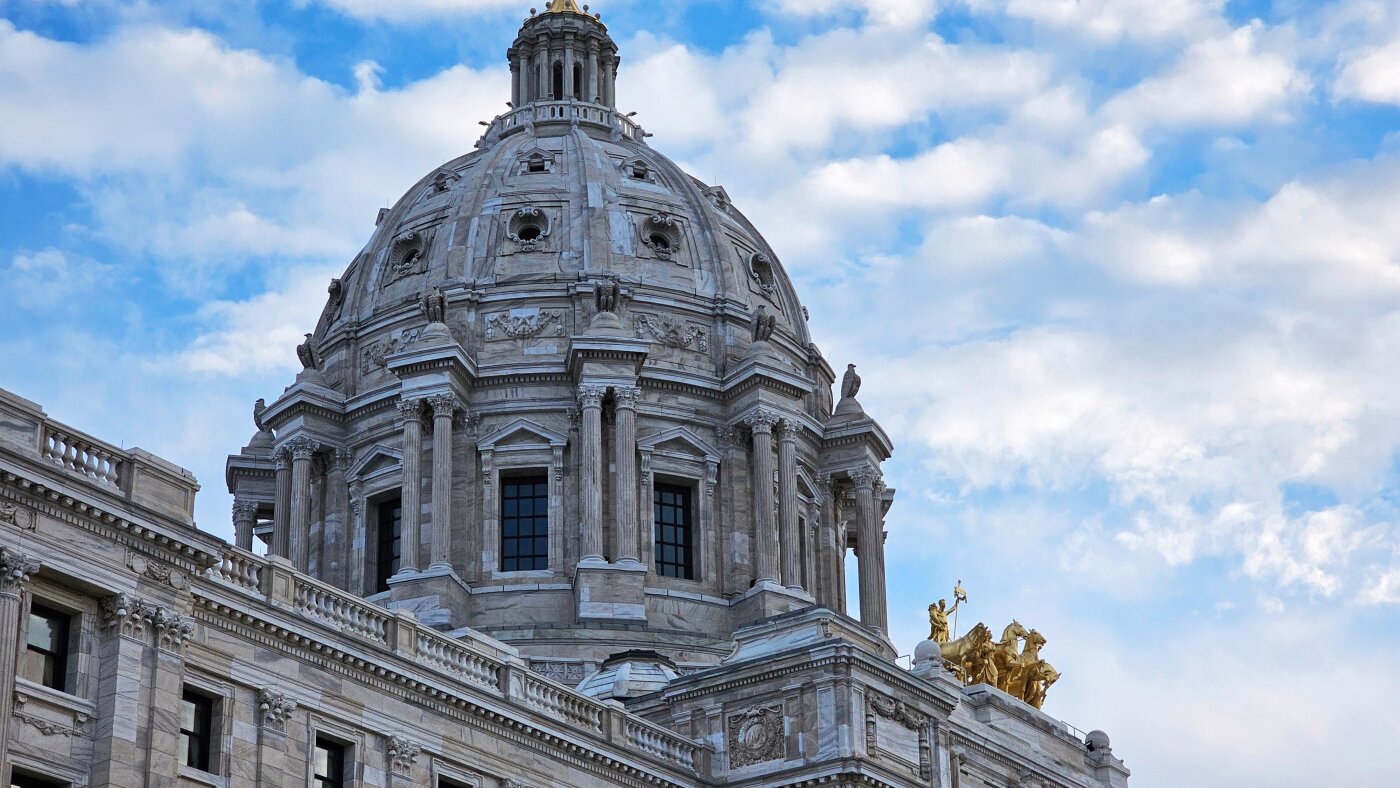
Our platform provides equity market coverage with a focus on earnings trends and trading activity. Minnesota has become the first state in the U.S. to enact a law criminalizing the operation of prediction markets, making it a felony for companies such as Kalshi and Polymarket to conduct business within its borders. The move marks an escalation in state-level regulatory pressure on the emerging industry, which has faced legal action from dozens of states in recent months.
Live News
Minnesota Becomes First State to Pass Felony Ban on Prediction MarketsCross-market monitoring allows investors to see potential ripple effects. Commodity price swings, for example, may influence industrial or energy equities.- First-of-its-kind felony law: Minnesota is the first state to make it a felony to operate a prediction market, elevating enforcement beyond civil penalties used by other states.
- Targeted platforms: The law explicitly mentions platforms like Kalshi and Polymarket, which offer event-based contracts on elections, sports, and economic outcomes.
- Escalating regulatory trend: Dozens of states have taken legal action against prediction markets, but Minnesota's law sets a new precedent for criminal liability.
- Potential industry impact: The felony classification could discourage investment, development, and user participation in Minnesota, and may prompt other states to consider similar legislation.
- Debate over market legitimacy: Proponents of prediction markets argue they provide hedging mechanisms and price discovery, while opponents equate them to unregulated gambling that poses risks to market integrity and consumer protection.
Minnesota Becomes First State to Pass Felony Ban on Prediction MarketsExperienced traders often develop contingency plans for extreme scenarios. Preparing for sudden market shocks, liquidity crises, or rapid policy changes allows them to respond effectively without making impulsive decisions.Some investors integrate technical signals with fundamental analysis. The combination helps balance short-term opportunities with long-term portfolio health.Minnesota Becomes First State to Pass Felony Ban on Prediction MarketsMonitoring market liquidity is critical for understanding price stability and transaction costs. Thinly traded assets can exhibit exaggerated volatility, making timing and order placement particularly important. Professional investors assess liquidity alongside volume trends to optimize execution strategies.
Key Highlights
Minnesota Becomes First State to Pass Felony Ban on Prediction MarketsMacro trends, such as shifts in interest rates, inflation, and fiscal policy, have profound effects on asset allocation. Professionals emphasize continuous monitoring of these variables to anticipate sector rotations and adjust strategies proactively rather than reactively.Minnesota has taken an unprecedented step against prediction markets by passing legislation that classifies their operation as a felony offense. The law specifically targets companies like Kalshi and Polymarket, which offer contracts on the outcomes of political events, sports, and other real-world occurrences. While dozens of states have pursued legal actions—including cease-and-desist orders or civil lawsuits—Minnesota is the first to impose criminal penalties.
The legislation, which was recently signed into law, makes it a felony offense for any entity to operate a prediction market that offers contracts on elections, sporting events, or other contingent events without proper authorization. Supporters of the bill argued that such markets function as unregulated gambling, potentially undermining election integrity and exposing consumers to financial harm. Critics, however, contend that prediction markets provide valuable data and hedging opportunities.
Industry participants and legal observers note that the felony designation could deter investors and operators from expanding into Minnesota. Companies like Kalshi and Polymarket have not yet commented publicly on the specific legislation. The move follows a broader crackdown by state regulators, with dozens of jurisdictions taking actions ranging from administrative orders to lawsuits, citing concerns over consumer protection and illegal gambling.
Minnesota Becomes First State to Pass Felony Ban on Prediction MarketsContinuous learning is vital in financial markets. Investors who adapt to new tools, evolving strategies, and changing global conditions are often more successful than those who rely on static approaches.Experts often combine real-time analytics with historical benchmarks. Comparing current price behavior to historical norms, adjusted for economic context, allows for a more nuanced interpretation of market conditions and enhances decision-making accuracy.Minnesota Becomes First State to Pass Felony Ban on Prediction MarketsSome investors use scenario analysis to anticipate market reactions under various conditions. This method helps in preparing for unexpected outcomes and ensures that strategies remain flexible and resilient.
Expert Insights
Minnesota Becomes First State to Pass Felony Ban on Prediction MarketsReal-time tracking of futures markets can provide early signals for equity movements. Since futures often react quickly to news, they serve as a leading indicator in many cases.The Minnesota law signals a potential shift in the regulatory landscape for prediction markets, a sector that has grown in popularity due to its use in forecasting political and economic outcomes. Legal analysts suggest that the felony designation could deter not only operators but also technology providers and payment processors from engaging with the industry in the state.
From an investment perspective, uncertainty surrounding state-level regulation may create headwinds for platforms and related firms. The patchwork of state actions could lead to increased compliance costs and operational complexity. While the federal Commodity Futures Trading Commission (CFTC) has taken its own enforcement actions against some prediction market operators, state-level criminalization adds a new layer of risk.
Market observers note that other states may follow Minnesota's lead, potentially restricting access to event-based contracts for a significant portion of the U.S. population. However, the legal foundation for such laws could face constitutional challenges, particularly regarding free speech and interstate commerce. Investors and participants are advised to monitor state-level developments closely, as the regulatory environment remains fluid and may evolve rapidly in the months ahead.
Minnesota Becomes First State to Pass Felony Ban on Prediction MarketsWhile technical indicators are often used to generate trading signals, they are most effective when combined with contextual awareness. For instance, a breakout in a stock index may carry more weight if macroeconomic data supports the trend. Ignoring external factors can lead to misinterpretation of signals and unexpected outcomes.Professionals emphasize the importance of trend confirmation. A signal is more reliable when supported by volume, momentum indicators, and macroeconomic alignment, reducing the likelihood of acting on transient or false patterns.Minnesota Becomes First State to Pass Felony Ban on Prediction MarketsEvaluating volatility indices alongside price movements enhances risk awareness. Spikes in implied volatility often precede market corrections, while declining volatility may indicate stabilization, guiding allocation and hedging decisions.