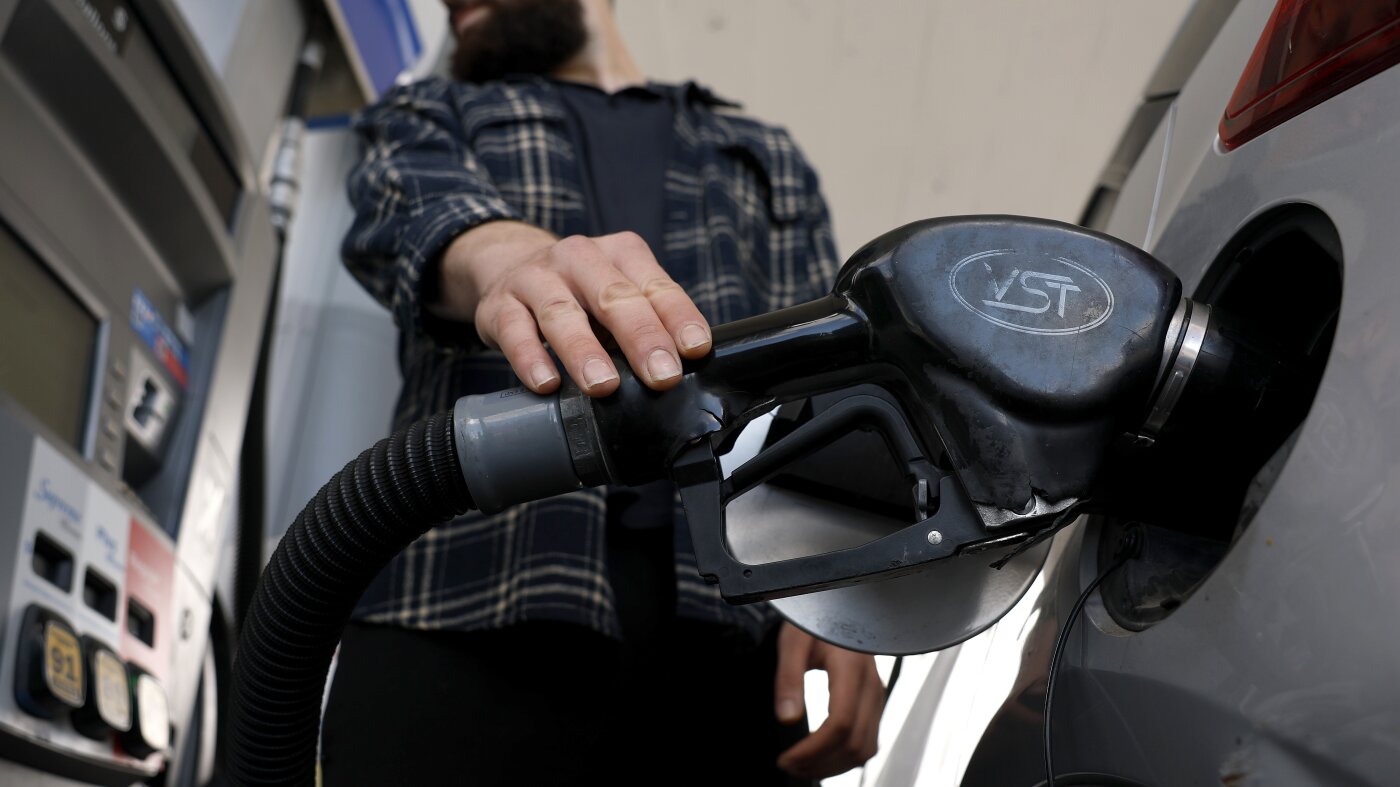
reference data The platform tracks financial markets with attention to earnings results, valuation changes, and investor sentiment. As the national average for a gallon of gasoline reaches $4.55 ahead of one of the busiest travel weekends of the year, consumers are exploring options to reduce fuel expenses. Driving slower, switching to electric vehicles, or avoiding driving altogether are among the strategies that may help individuals manage rising costs.
Live News
reference data Access to multiple timeframes improves understanding of market dynamics. Observing intraday trends alongside weekly or monthly patterns helps contextualize movements. Monitoring multiple asset classes simultaneously enhances insight. Observing how changes ripple across markets supports better allocation. The latest available data from AAA shows that the national average gasoline price stands at $4.55 per gallon, coinciding with the approach of a major holiday travel period. This price level represents a significant increase compared to previous years, putting pressure on household budgets and travel plans. NPR’s reporting highlights several practical approaches that drivers might consider to cut fuel costs. One of the most straightforward methods is reducing driving speed, as fuel efficiency typically decreases at higher speeds. Additionally, transitioning to electric vehicles (EVs) could offer long-term savings on fuel, though the upfront cost and charging infrastructure remain considerations. Another option is simply not driving at all—using alternative transportation such as public transit, carpooling, or staying local may help avoid high gasoline expenses. The report notes that these strategies are especially relevant given the current price environment and the expected surge in travel demand during the upcoming holiday weekend. While no single solution fits all circumstances, the combination of behavioral changes and vehicle choices could potentially lead to meaningful savings for consumers.
Gas Prices Near $4.55 Average: Consumer Strategies to Manage Fuel Costs This Travel Weekend Visualization tools simplify complex datasets. Dashboards highlight trends and anomalies that might otherwise be missed.Observing correlations between markets can reveal hidden opportunities. For example, energy price shifts may precede changes in industrial equities, providing actionable insight.Gas Prices Near $4.55 Average: Consumer Strategies to Manage Fuel Costs This Travel Weekend Real-time alerts can help traders respond quickly to market events. This reduces the need for constant manual monitoring.Trading strategies should be dynamic, adapting to evolving market conditions. What works in one market environment may fail in another, so continuous monitoring and adjustment are necessary for sustained success.
Key Highlights
reference data Investors often evaluate data within the context of their own strategy. The same information may lead to different conclusions depending on individual goals. Investors often test different approaches before settling on a strategy. Continuous learning is part of the process. Key takeaways from the NPR report and broader market implications include: - Driving behavior and fuel economy: Reducing highway speeds by 5 to 10 miles per hour may improve fuel efficiency by 7% to 14% per gallon, according to estimates from the U.S. Department of Energy. This behavioral adjustment could be one of the most immediate ways to lower fuel consumption. - Electric vehicle adoption as a long-term strategy: While EVs currently represent a small fraction of U.S. vehicle sales, the high gasoline prices may accelerate consumer interest. However, factors such as vehicle availability, charging network expansion, and electricity costs could influence adoption rates. - Reduced travel demand: The option of avoiding trips entirely—through telework or local activities—might lower overall gasoline demand in the short term. If sustained, such shifts could have implications for energy markets and consumer spending patterns. - Broader economic impact: Elevated gasoline prices may reduce discretionary spending in other areas, potentially affecting retail, hospitality, and transportation sectors. Inflation concerns could also be heightened if fuel costs persist. The data underscores that consumer responses to high gas prices are varied and multifaceted, with potential ripple effects across the economy.
Gas Prices Near $4.55 Average: Consumer Strategies to Manage Fuel Costs This Travel Weekend Analytical tools are only effective when paired with understanding. Knowledge of market mechanics ensures better interpretation of data.Monitoring derivatives activity provides early indications of market sentiment. Options and futures positioning often reflect expectations that are not yet evident in spot markets, offering a leading indicator for informed traders.Gas Prices Near $4.55 Average: Consumer Strategies to Manage Fuel Costs This Travel Weekend Real-time tracking of futures markets often serves as an early indicator for equities. Futures prices typically adjust rapidly to news, providing traders with clues about potential moves in the underlying stocks or indices.Some investors prioritize clarity over quantity. While abundant data is useful, overwhelming dashboards may hinder quick decision-making.
Expert Insights
reference data Scenario analysis based on historical volatility informs strategy adjustments. Traders can anticipate potential drawdowns and gains. Cross-market correlations often reveal early warning signals. Professionals observe relationships between equities, derivatives, and commodities to anticipate potential shocks and make informed preemptive adjustments. From a professional perspective, the $4.55 per gallon national average represents a level that historically has prompted changes in consumer behavior and market dynamics. Analysts suggest that sustained high gasoline prices could lead to a modest shift in vehicle purchasing preferences toward more fuel-efficient models, including hybrids and electric vehicles. However, the transition may be gradual due to supply chain constraints and consumer hesitation. For investors, the implications are nuanced. Companies in the energy sector may benefit from elevated oil and gasoline prices in the near term, but prolonged high prices could dampen economic activity and reduce demand over time. Conversely, firms involved in electric vehicle production, battery technology, or public transit infrastructure could see increased interest as consumers seek alternatives. It is important to note that market conditions are subject to a wide range of influences, including geopolitical events, production decisions by major oil-exporting countries, and domestic policy changes. While the current price environment creates opportunities for certain strategies, outcomes remain uncertain. Disclaimer: This analysis is for informational purposes only and does not constitute investment advice.
Gas Prices Near $4.55 Average: Consumer Strategies to Manage Fuel Costs This Travel Weekend Some traders combine trend-following strategies with real-time alerts. This hybrid approach allows them to respond quickly while maintaining a disciplined strategy.Combining technical and fundamental analysis allows for a more holistic view. Market patterns and underlying financials both contribute to informed decisions.Gas Prices Near $4.55 Average: Consumer Strategies to Manage Fuel Costs This Travel Weekend Experienced traders often develop contingency plans for extreme scenarios. Preparing for sudden market shocks, liquidity crises, or rapid policy changes allows them to respond effectively without making impulsive decisions.Some traders combine sentiment analysis from social media with traditional metrics. While unconventional, this approach can highlight emerging trends before they appear in official data.